

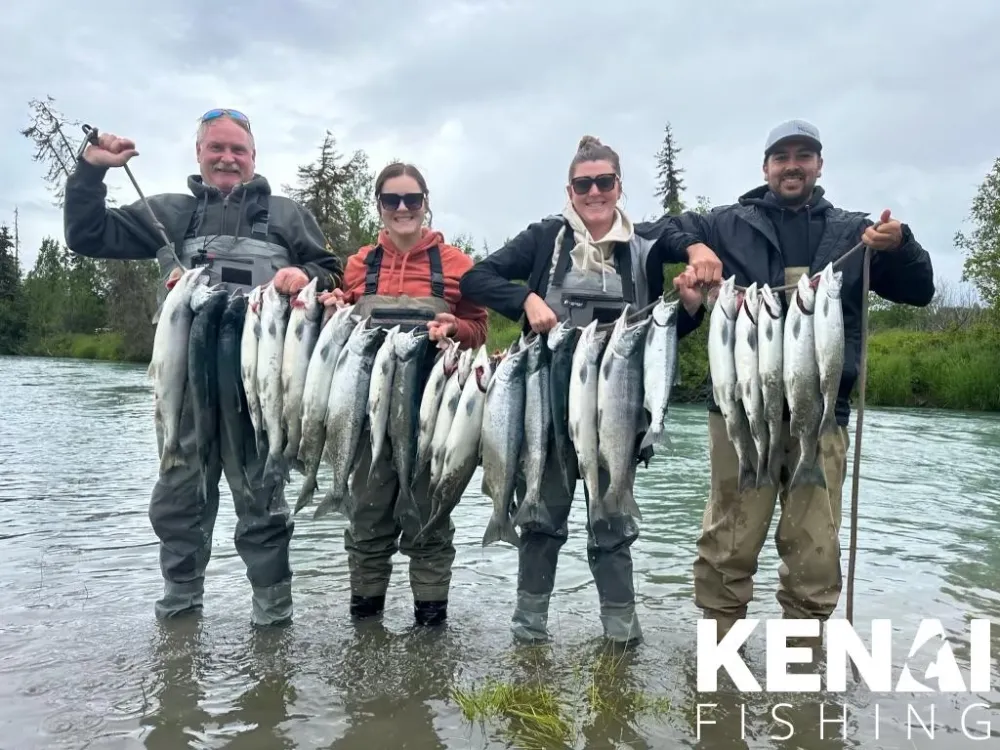
Russian River Sockeye
The Russian River is a beautiful, gravel-bottom stream that joins the Kenai River in Cooper Landing. Famed for its crystal-clear water and spectacular mountain scenery, the Russian River hosts two distinct runs of sockeye salmon. Because the water is clear, anglers can visually sight-cast to passing fish. ADF&G operates a physical picket weir at the outlet of Russian Lake to count migrating salmon.
Russian Lake Picket Weir
Visual counts are recorded daily by technicians at the weir gates, providing extremely accurate data.
June & July Run Peaks
The early run peaks in mid-June, followed by the larger late run starting in late July.
Sanctuary Boundary Rules
Special boundary rules protect the confluence zone. Always check marker signs before casting.
From the River
Live Russian River Sockeye Weir Charts
Explore live early-run and late-run sockeye counts. Historical datasets can be selected using the dropdown.
Early Run (June - July)

Late Run (July - August)
The Russian Lake Picket Weir
Unlike the mainstem Kenai River which relies on sonar, the Russian River features a physical picket weir located at the outlet of Russian Lake. Because the Russian River is shallow and clear, ADF&G technicians can construct a barrier across the river channel.
Fish are guided through a small gate opening, allowing staff to visually count and identify each salmon. Weir counts represent a 100% accurate count of the spawning escapement that reaches the lake. However, because the weir is located several miles upstream of the sport fishing area, there is a delay of 2 to 5 days between when fish pass the sport fishery and when they are counted at the weir.
The Confluence Sanctuary & Ferry
The confluence of the Russian and Kenai rivers is one of the most famous fishing spots in Alaska. Sockeye migrating up the Kenai pool in the cooler water of the Russian River before entering the tributary.
To prevent overharvest of these aggregated fish, ADF&G designates a sanctuary zone around the mouth. This zone is closed to fishing from June 1 through July 14. Once the sanctuary opens on July 15, fishing is permitted under special terminal tackle rules.
Anglers access the south bank of the confluence using the Russian River Ferry, operated by the Kenai Peninsula Borough. The ferry shuttles anglers across the Kenai River to the mouth of the Russian River, providing safe access to boardwalks and gravel bars.
Sight-Flossing in Clear Water
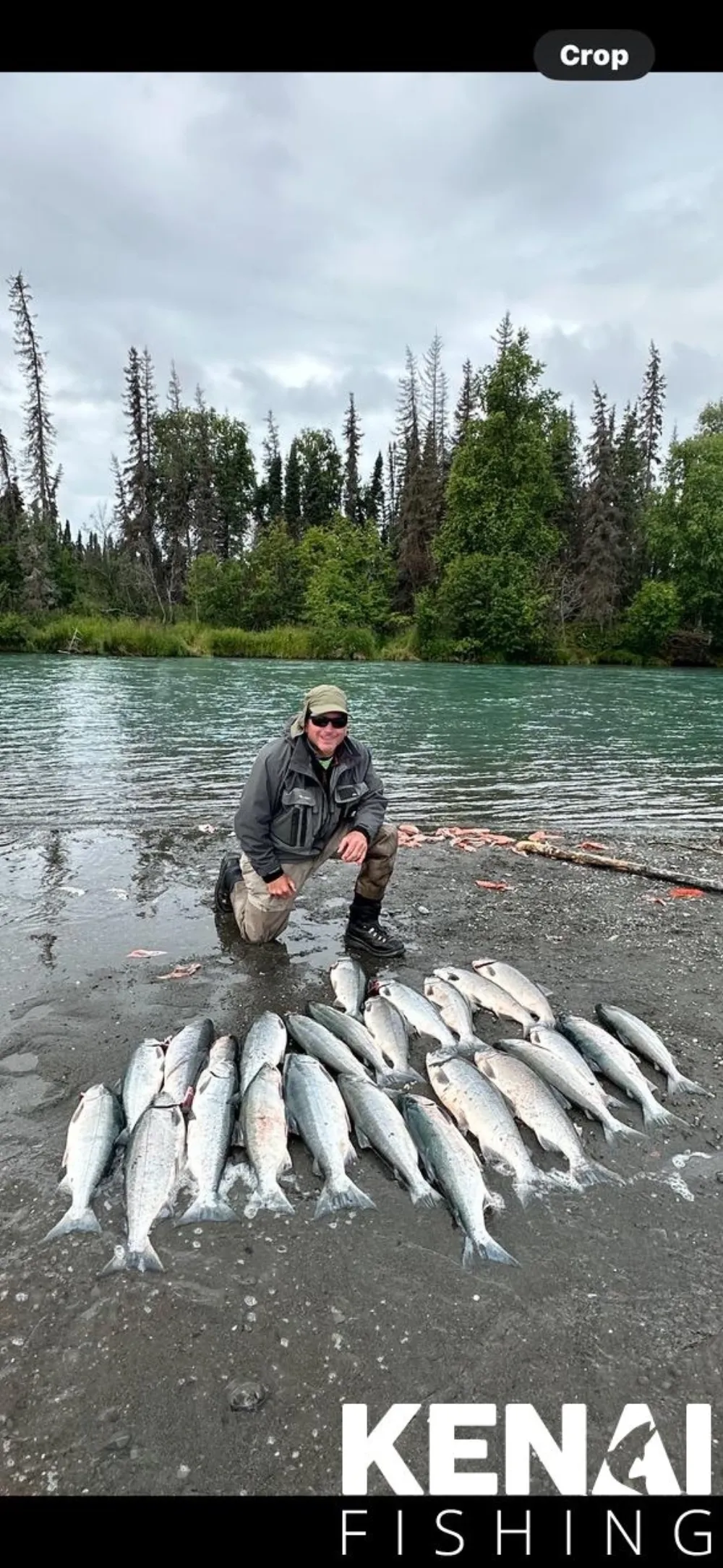
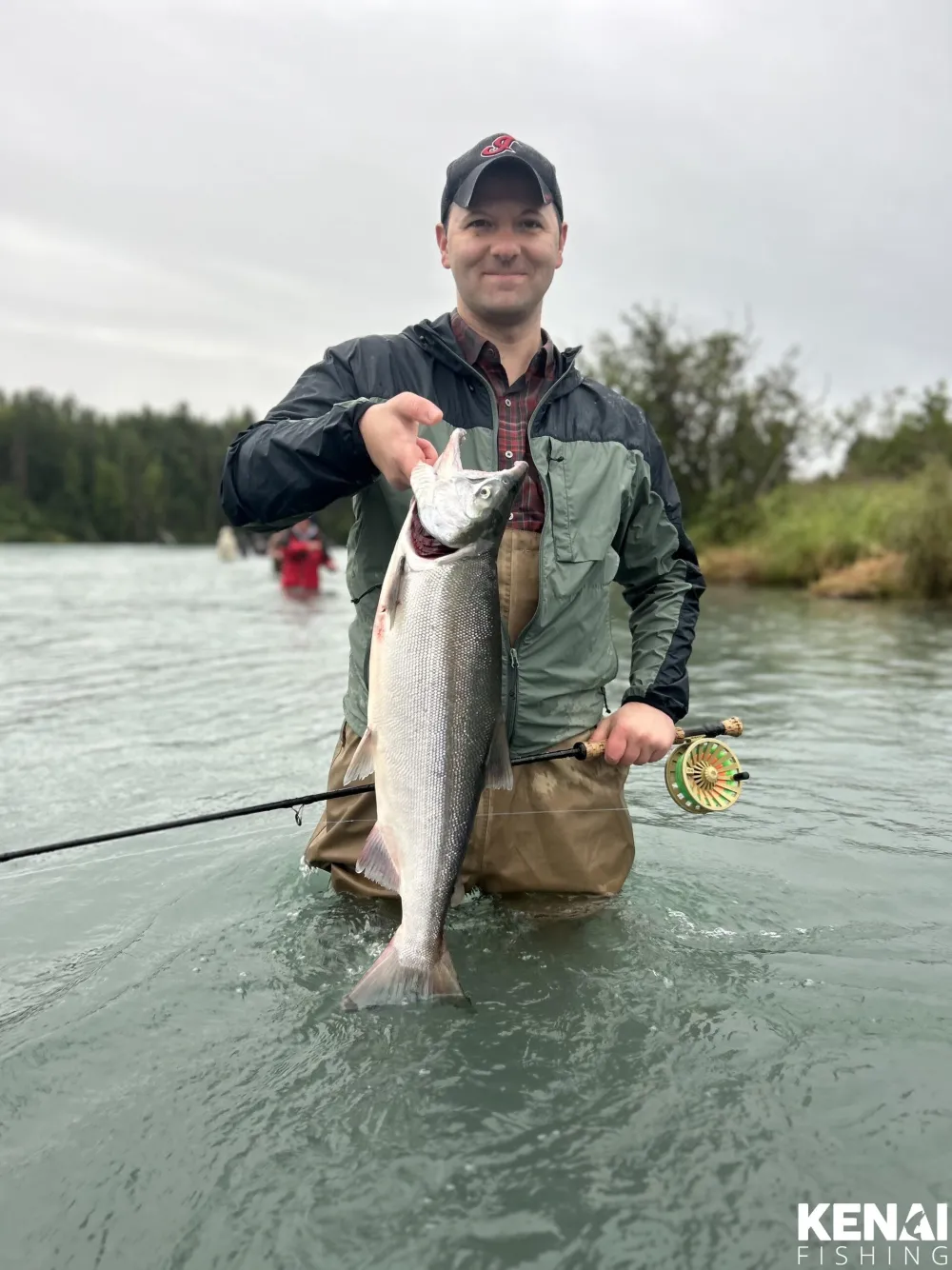
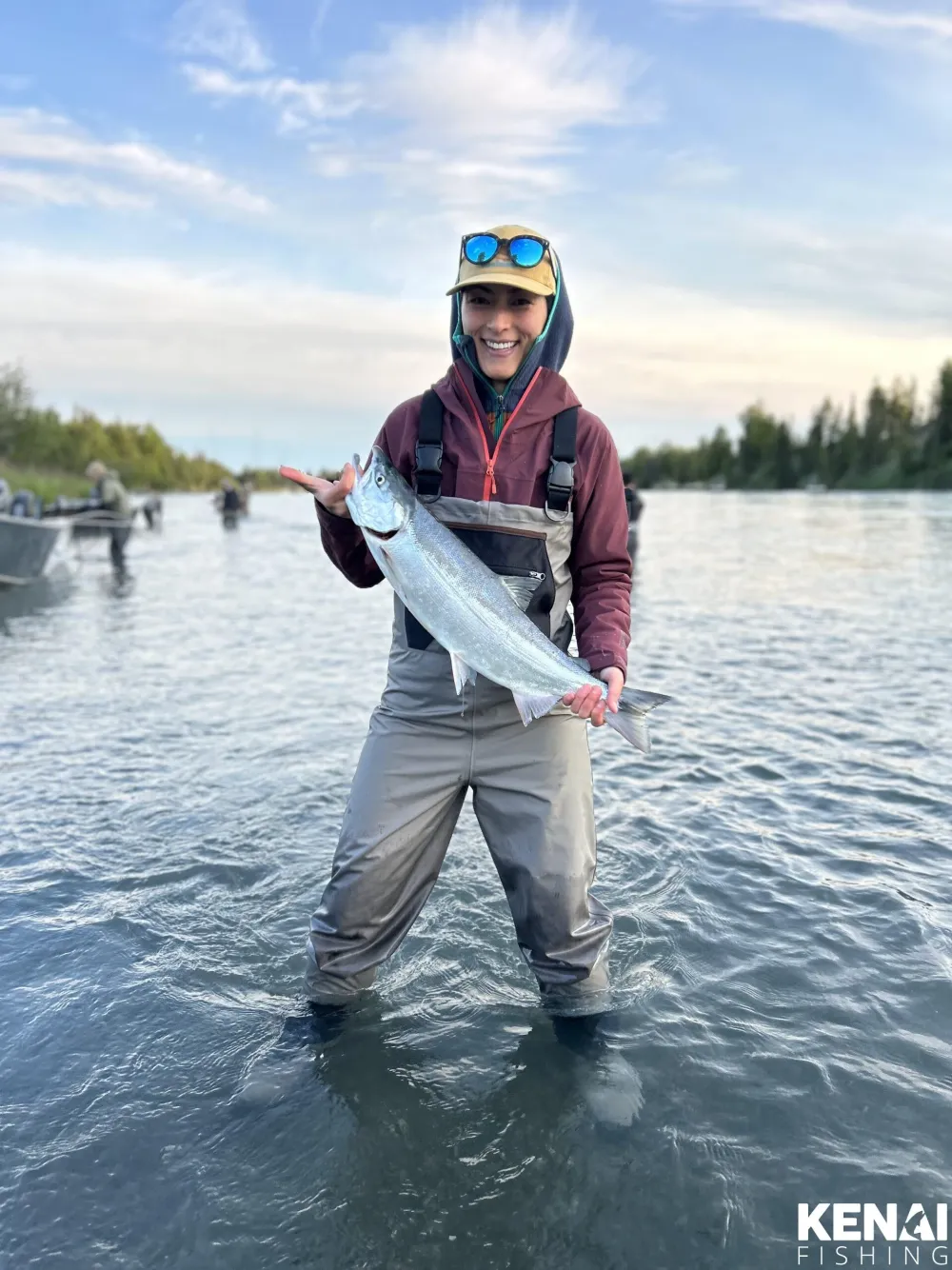
Fishing the Russian River is a highly visual experience. In the clear gravel runs, you can see schools of red salmon holding in the current.
- Lighter Leaders: Because the water is clear, sockeye are more line-shy. Use 15 to 20 lb fluorocarbon leaders, which are thinner and less visible than the heavy lines used on the main Kenai.
- Minimal Weight: Use split shot weights (1/8 to 1/2 oz) rather than heavy inline weights. The goal is to tick the gravel lightly without splashing or spooking the school.
- Longer Leader Length: A leader of 48 to 60 inches is common, allowing the fly to float naturally through the school at fish eye-level.
Historical Russian River Sockeye Weir Totals
| Year | Early Run Weir Total | Late Run Weir Total | Status | Management Notes |
|---|---|---|---|---|
| 2022 | 61,098 | 124,561 | Very Strong | Excellent escapement recorded at the Russian Lake weir. |
| 2023 | 66,818 | 160,430 | Exceptional | Both runs hit the upper bounds of biological escapement goals. |
| 2024 | 34,677 | 70,009 | Met Goals | Healthy passage numbers comfortably achieving weir objectives. |
| 2025 | 37,153 | 66,681 | Met Goals | Steady run timing with consistent counts into early August. |